Portfolio · 2026

Programmer and Lighting Director (NA/Int.) Programmer and Production Designer (EU and UK)
The brief
Ella Mai wasn’t unknown before she signed with Mustard’s 10 Summers label, but after the ink dried, the contemporary R&B singer/songwriter achieved true international stardom with “Boo’d Up” (2018), a sparkling slow jam exhibiting her casually commanding vocals. A Top Ten U.S. pop hit and a Grammy winner for Best R&B Song, the track drove its parent album, Ella Mai, to the upper reaches of the charts in the U.S. and the artist’s native U.K., and was eventually joined by three additional gold, silver, and platinum singles. Mai had seven RIAA-certified hits as a headliner by the time she issued Heart on My Sleeve (2022), her second full-length. It reached number two on the R&B chart, prompting a 2023 deluxe edition ahead of her 2024 EP 3.
(Source: Andy Kellman, Rovi via Spotify)
The design
International: The international lighting design and most programming was by David “Fuji” Convertino, with additional programming by myself. I take credit for three songs fully programmed by me, and touch-ups to the updated musical direction once the tour was underway.
North America: The North America run was designed in collaboration with Wasted Potential. They handled the overall production design, and creative vision. I was responsible for programming the lighting and influencing the design with my lighting ideas. I do not take credit for the lighting plot, or scenic design for the North American run.
Europe: The Europe tour I took credit as the production designer, responsible for scenic design, lighting design, and blocking on stage.
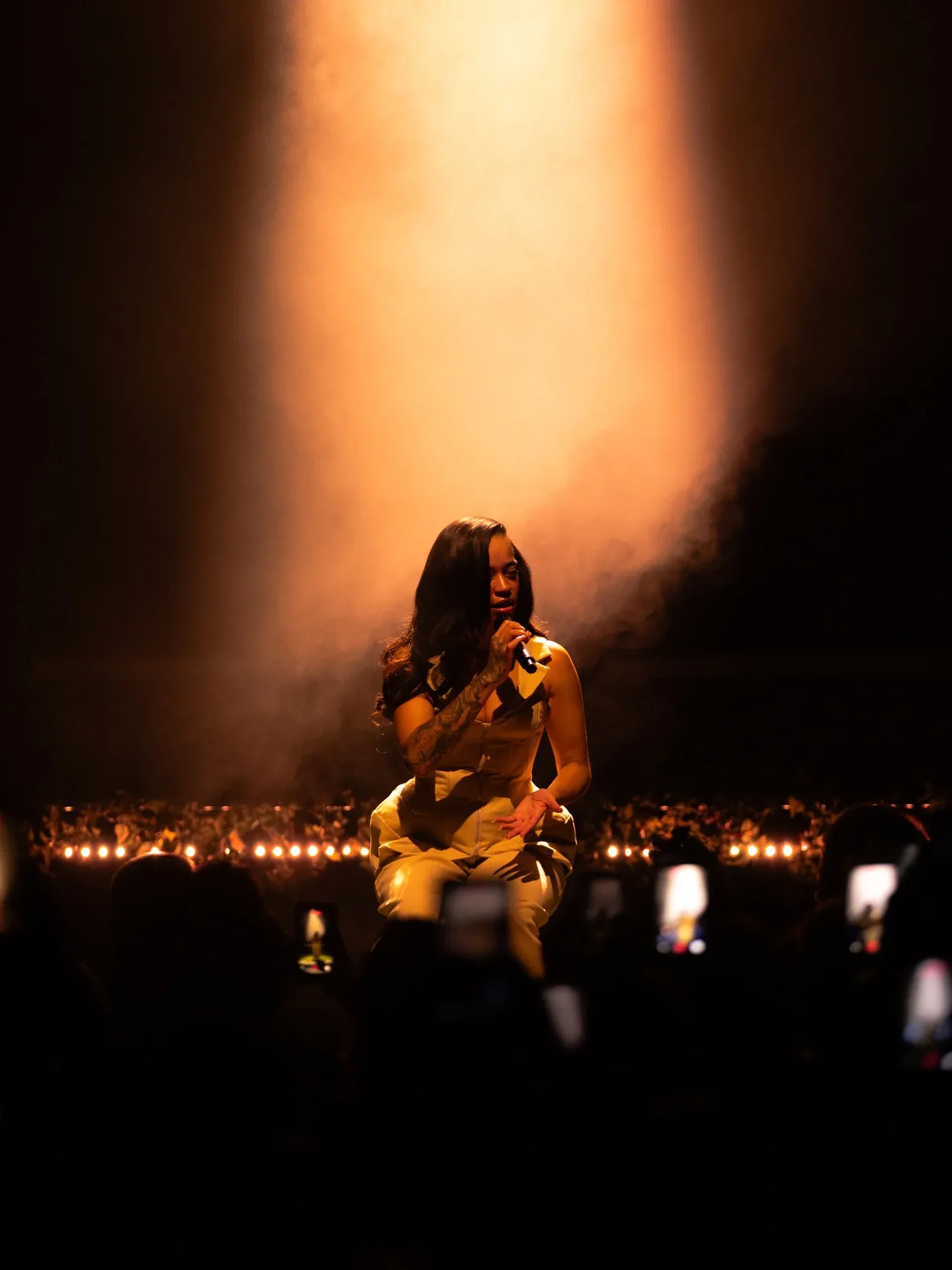
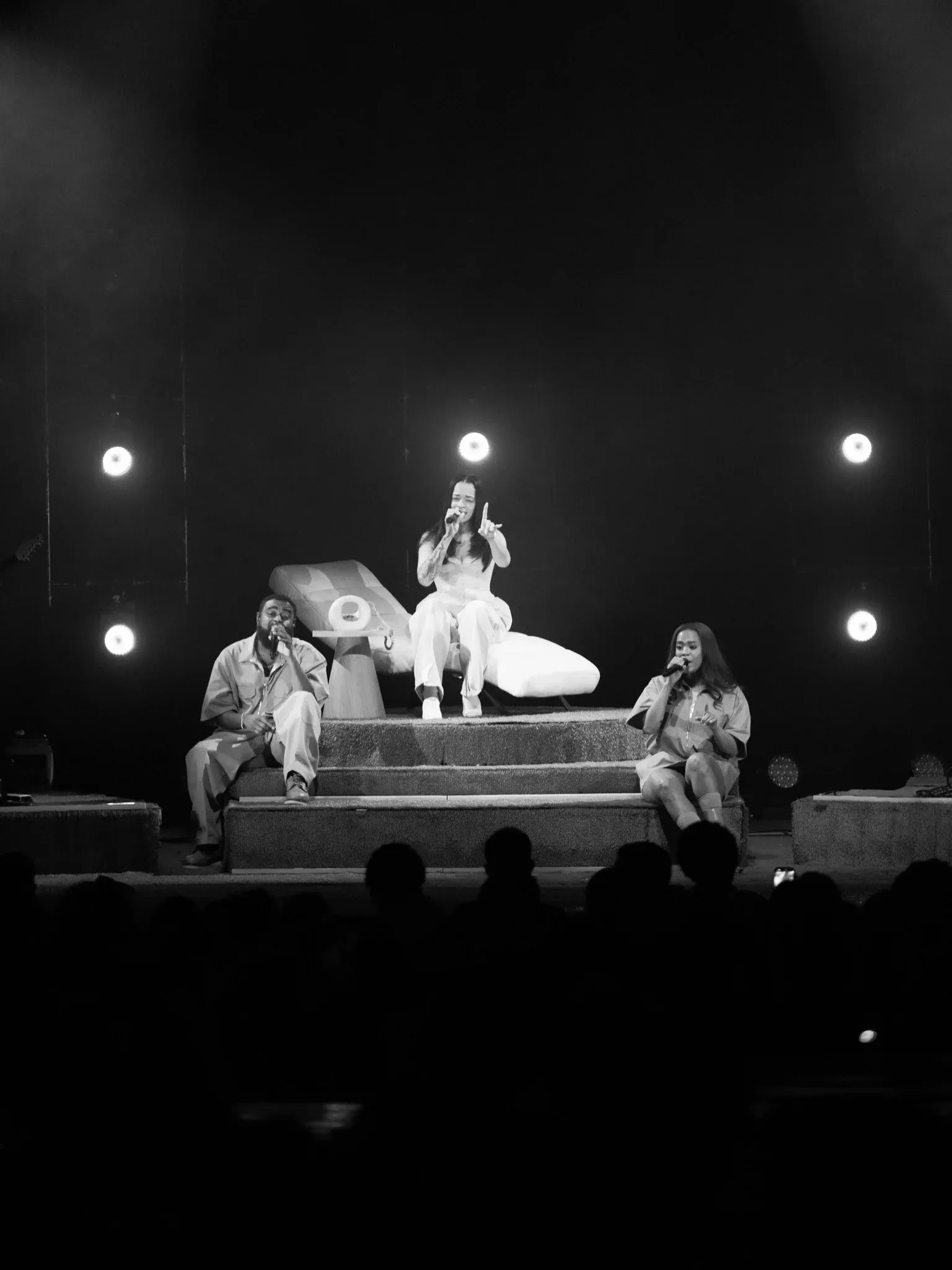
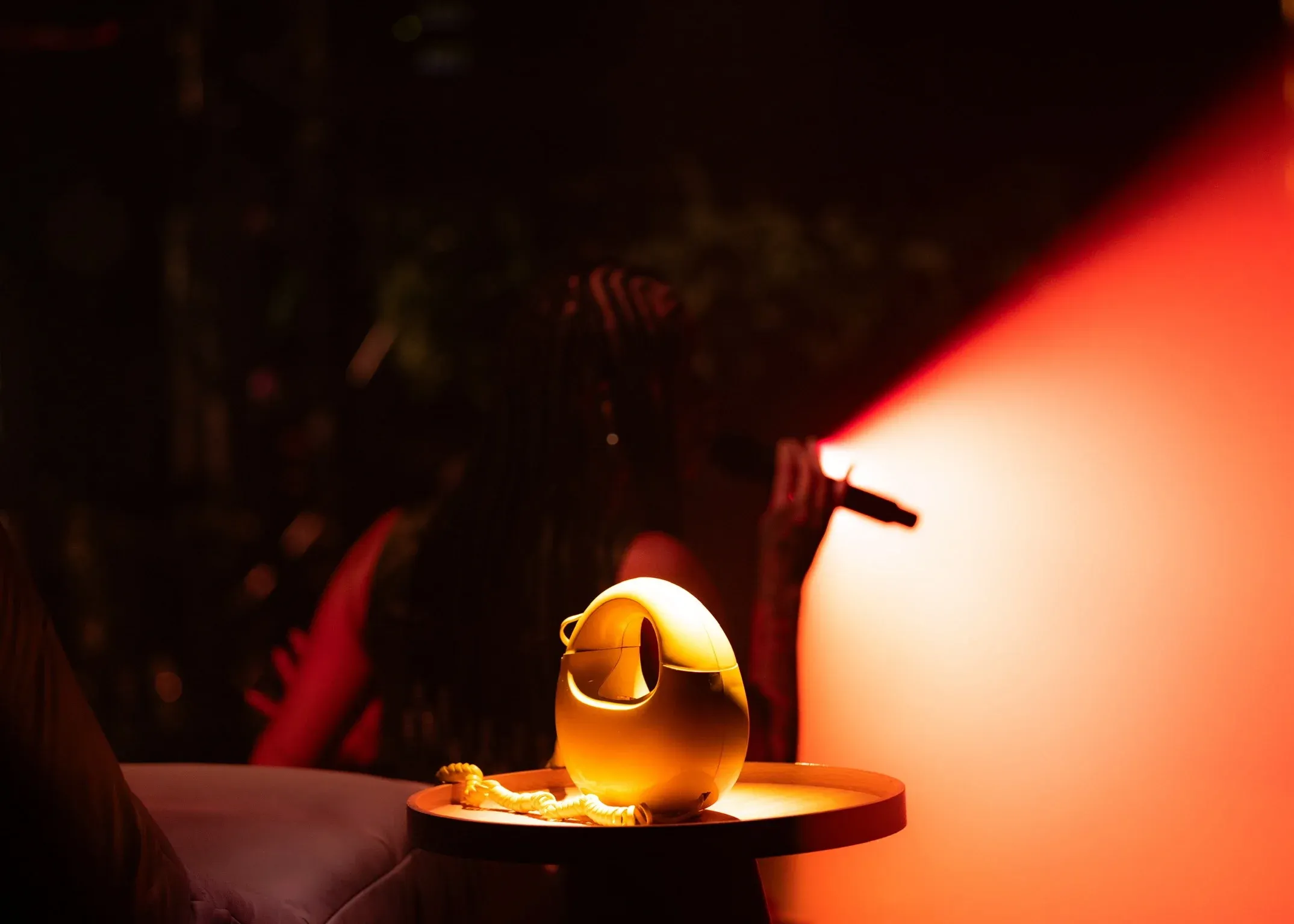
The scenic design was simple. Upstage right, there was a 2m wide circular riser, covered in faux-grass. Situated on top of the riser was her white-chaise from her marketing photos sitting on top, and also next to her chaise was a side table with the iconic yellow “Donut Phone.” The downstage playing area was also covered edge-to-edge with faux-grass.
The grass featured daisies scattered as texture. Vines and ivy growing up the microphone stands for both Ella and her Background Vocalists.
The lighting trusses were also dressed in a similar vegetative way. Vines and ivy appearing to grow around the truss. The ivy also was able to conceal a GLP X4 Bar and Acme Pixel Line on the upstage trusses, allowing the light to backlight and shine through without being obviously visible.
There was a total of four upstage trusses, all four of these trusses were identical, except the offstage right and offstage left truss incorporated a hidden pixel line in the basket, right above the X4 bar.
Each of these trusses also featured 2x Martin Mac Ones on the onstage and offstage most points, with an Acme Pixel Line situated in the space between them.
For the downstage trusses, they were set to act as side light. These two trusses were both identical. Featuring 2x Martin Mac Viper XIP on the underside to act as key side lighting, 1x Martin Mac One on the downstage side, and 1x GLP Impression X4 Bar just upstage of the Mac One (Facing onstage).
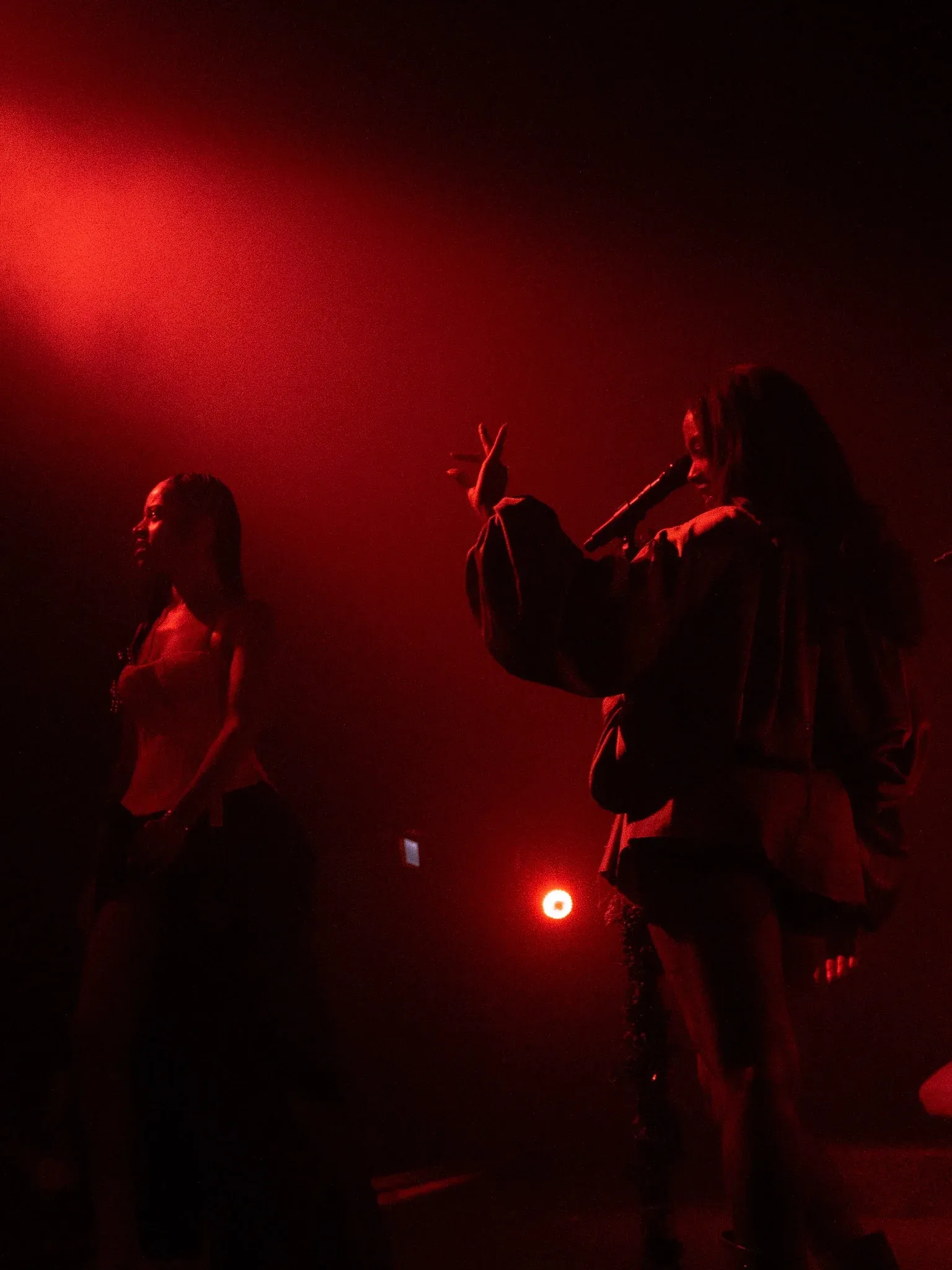
In order to battle the various venue sizes, and limited fly lighting rigs, I also incorporated 7x Robe Footsies 2 on the downstage edge. Each one fixed with their medium diffusion filters. This groundrow of footlight was able to fill in eye-socket shadow created from less-than-ideal front light angles, and work in unison with the side Mac Vipers to remove the need to rely on heavy front-light that was not guaranteed at every venue.
United Kingdom:
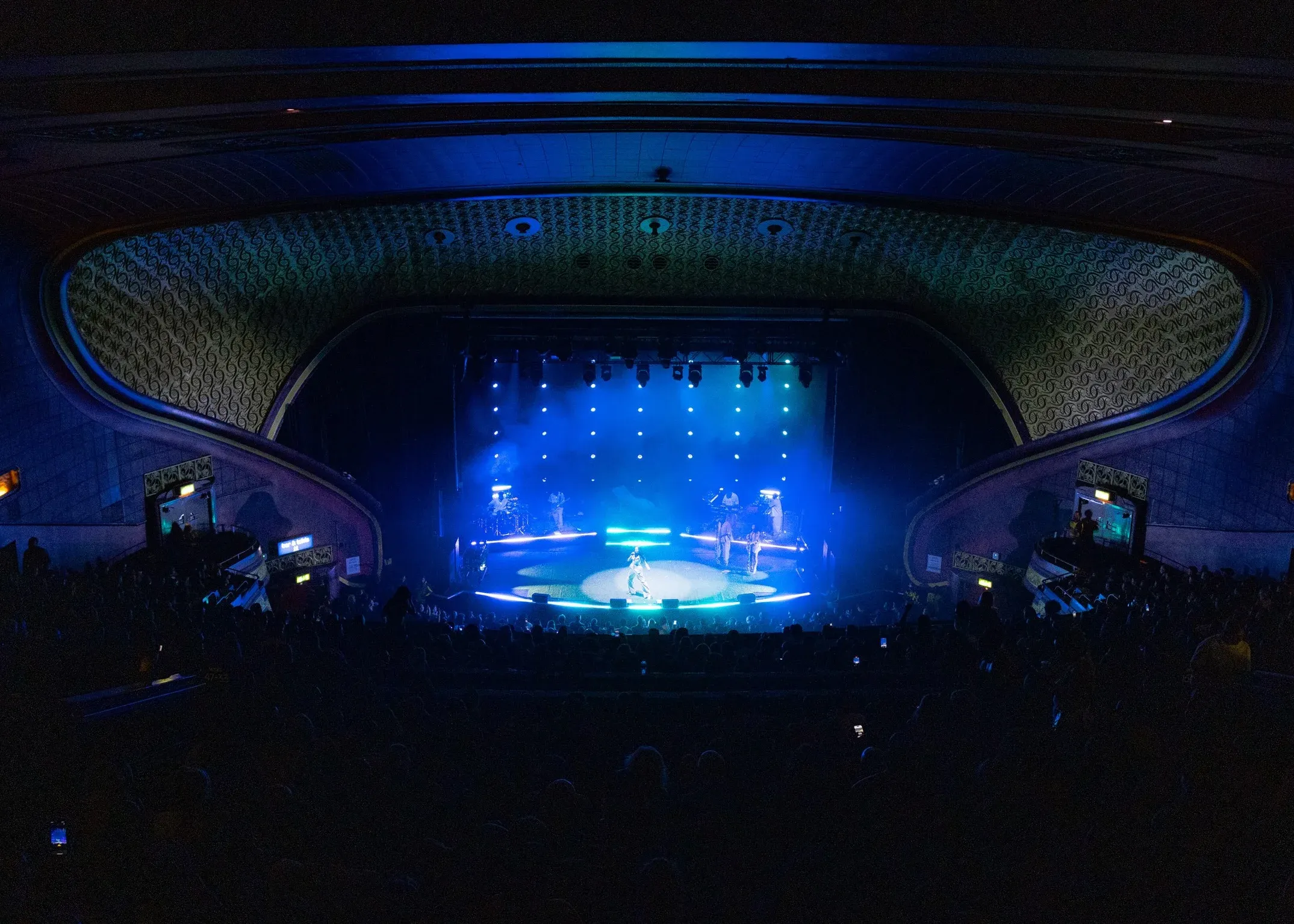
The design for the United Kingdom was a hybrid design featuring similar features to the North American run. The flying rig consisted of an upstage wall of 42x Martin Mac One fixtures, 22x Martin Mac Ultras profile fixtures, 18x Martin Mac Aura PXL wash fixtures, and 6x GLP JDC Burst 1 strobes.
42x (all) of the Mac Ones were flying on Doughtry H Torm ladders, resting a few meters upstage of the upstage edge of the scenic elements. Acting as eye candy, wash light, back light, beam effects, and more. These fixtures were in their 108ch mode, so I had full control over their unique fresnel backlight system. 4x of the Mac Ultras acting as band specials hung off the ladder truss, and the remaining 18 split between 2 over-stage trusses, and 1 front light truss. These profiles were used for key lighting, air fx, scenic wash, specials, and eye candy. 12x of the Mac Aura PXL fixtures on the 2 over-stage trusses, and the remaining 6 on the front light truss. These fixtures were used for key lighting, eye candy (think of similar programming to strobe fixtures, pointed straight at the crowd with a wide zoom), beam effects (zoomed in to form a tight beam for one moment of the set) 8x of the JDC Burst 1 fixtures on the downstage most over-stage truss. These acted as typical strobe fixtures. Running in full control mode, they ran color effects, dimmer effects, acted as blinders, strobe effects, and crowd wash.
The floor package consisted of the 2x downstage side trusses from the EU run, and 2 out of the 4x upstage trusses, 6x Martin Mac Aura XB wash fixtures, and 37x Martin VDO Sceptron XB, 1000mm.
The side trusses were situated in their typical spot, Downstage Left and Downstage Right. The 2x upstage trusses were situated behind the 2 band risers on either side of the stage, matching the angle of the band riser.
6x Mac Aura XB situated upstage, evenly spread between the gap of the onstage edge of the two band risers. These acted as backlight and atmospheric light.
18x of the Martin VDO Sceptron XB were used on the stage decks to outline the band risers and center chair riser. 19x of Martin VDO Sceptron XB were used to outline the downstage edge of the stage floor. Acting as eye candy, running in their 100 pixel control mode for high-resolution color effects.
The technical
International:
The international run included Japan, China, Indonesia, the Philippines, Korea, and Australia. Each venue was different, with a new floor package rented from a different provider in each location. Some of these were festivals, where I had limited time to program. Others were more intimate “Nights With” Ella. Networking, prep, and other technical elements were mostly handled by the local lighting company.
North America: A rather appreciable set designed by Wasted Potential took up the full width of almost every venue we stopped by. Lighting was provided by PRG. My Lighting Crew Chief, Emin Hakop, was responsible for managing the lighting network, power distribution, and organization of local lighting labor. Featuring 1x GrandMA3 Full Size, 1x GrandMA3 Light, 2x Medium GrandMA3 PU, PRG HydraNodes, and PRG Managed Switches. Connecting FOH with Dimmer beach was a snake featuring ProPlex Opticalcon fiber, an analog Whirlwind snake for spot comms, and unused ethercon lines.
2x Ayrton Diablos acting as PRG GroundControl robo spots. One situated Upstage center as backlight, and one downstage center as key light. I was responsible for calling the cues for the robo spots during the show.
No flying package, so I was also responsible for tying in, and programming each venue’s lighting rig to work with my programming.
The showfile was built 100% with MA3 Cue Recipes, and Phaser Recipes. No cloning was required at all, simply store the new fixtures in their most logical group, and update presets to fit.
Europe: Purposefully designed to move on and off stage within minutes. I did not have a lighting tech for the Europe run, so I was responsible for getting the lighting package set up every night. No cable caddies required, and spare fixtures were hidden behind vegetation on the truss. I designed the upstage trusses to roll on and off, with power and data breakouts living on the upstage right most truss. The remaining 3 upstage trusses had looms, already connected to each truss, that ran back to the breakouts. The socapex and data loom rode ontop of the upstage right truss. The Downstage Right side truss carried the breakouts for both the downstage footsie fixtures and the Downstage left side truss. The footsies have a built in cable trough, so crossover was concealed on the downstage edge. The socapex and data loom rode ontop of the stage right truss. The Downstage Left side truss and the footsies both had a loom that ran through the crossover to the breakout on the Stage Right truss. This allowed audio and lighting to never have to cross cables on the stage left side. The looms coiled to ride ontop of the stage left truss.
United Kingdom:
Very similar to the North American technicals, except was provided by Siyan UK. They also provided a crew chief and three lighting techs who were responsible for the entire lighting rig.
This included 4x LX Trusses, with 13 total LX rigging points. All power, data, and prep was handled by Siyan techs.
LX1 - Over-Audience frontwash truss. LX2 - Over-Stage lighting truss Downstage. LX3 - Over-Stage lighting truss Midstage. LX4 - Over-stage lighting and Ladder Carrier truss Upstage.
Running several GrandMA3 PU L to handle the increased parameter footprint, they also utilized Luminex Luminodes to handle sACN and unmanaged switches to handle a combined MA-Net/sACN network.
Photography: Shane Hanson